
7 min read · Last updated June 29, 2026
- A section, or spot, repair runs $4,000 to $8,000. A full sewer line replacement by traditional dig runs $8,000 to $20,000.
- Trenchless replacement (pipe bursting or CIPP lining) costs $6,000 to $18,000 but finishes in 1 to 2 days and spares your yard the trench.
- If your line has backed up more than once in the same spot, a spot repair often fails again within two years, so you pay twice.
- Never accept a sewer bid without a camera inspection first, which runs $100 to $500. It is the only way to know if a localized repair will actually hold.
In this article
– The two real numbers: spot repair vs full replacement – Trenchless vs dig: what each costs your yard – The question that actually decides it – The five-year math: when paying twice costs more – Before you sign: the camera and the quote – FAQ
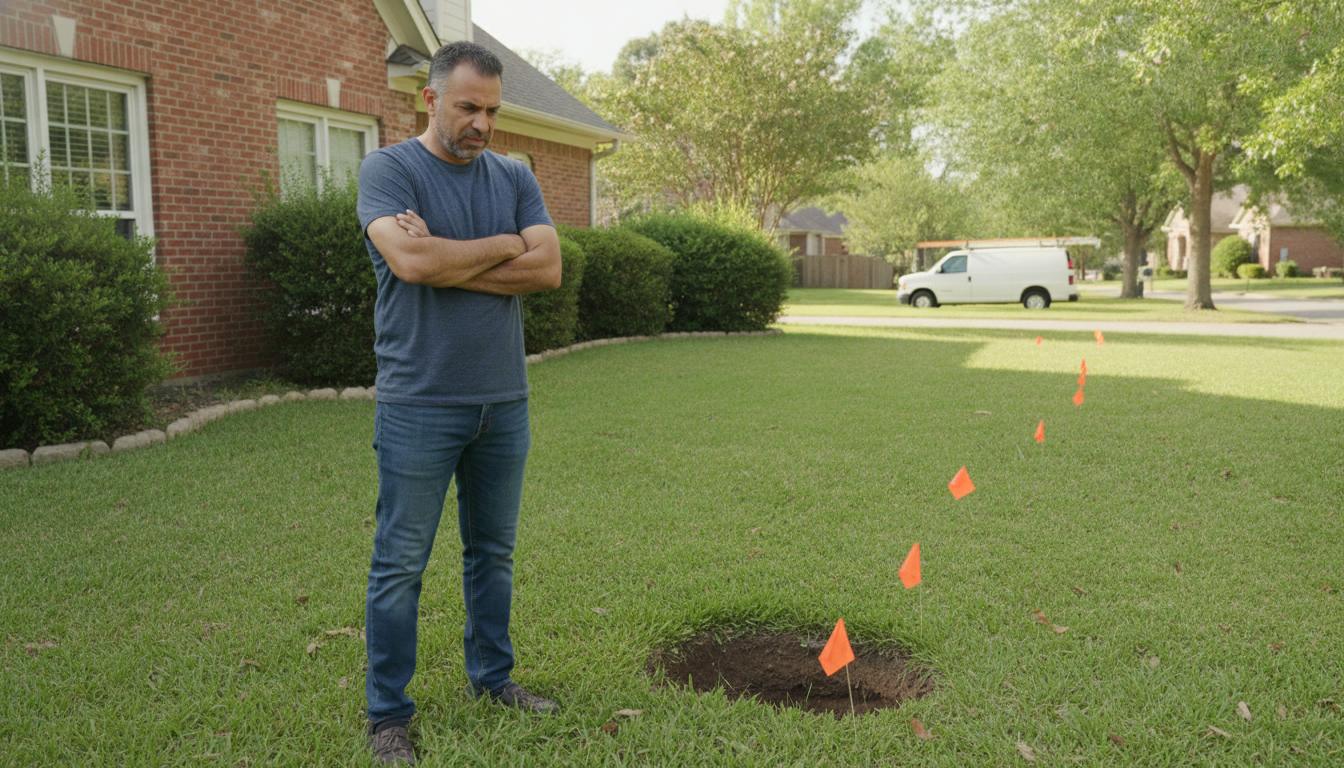
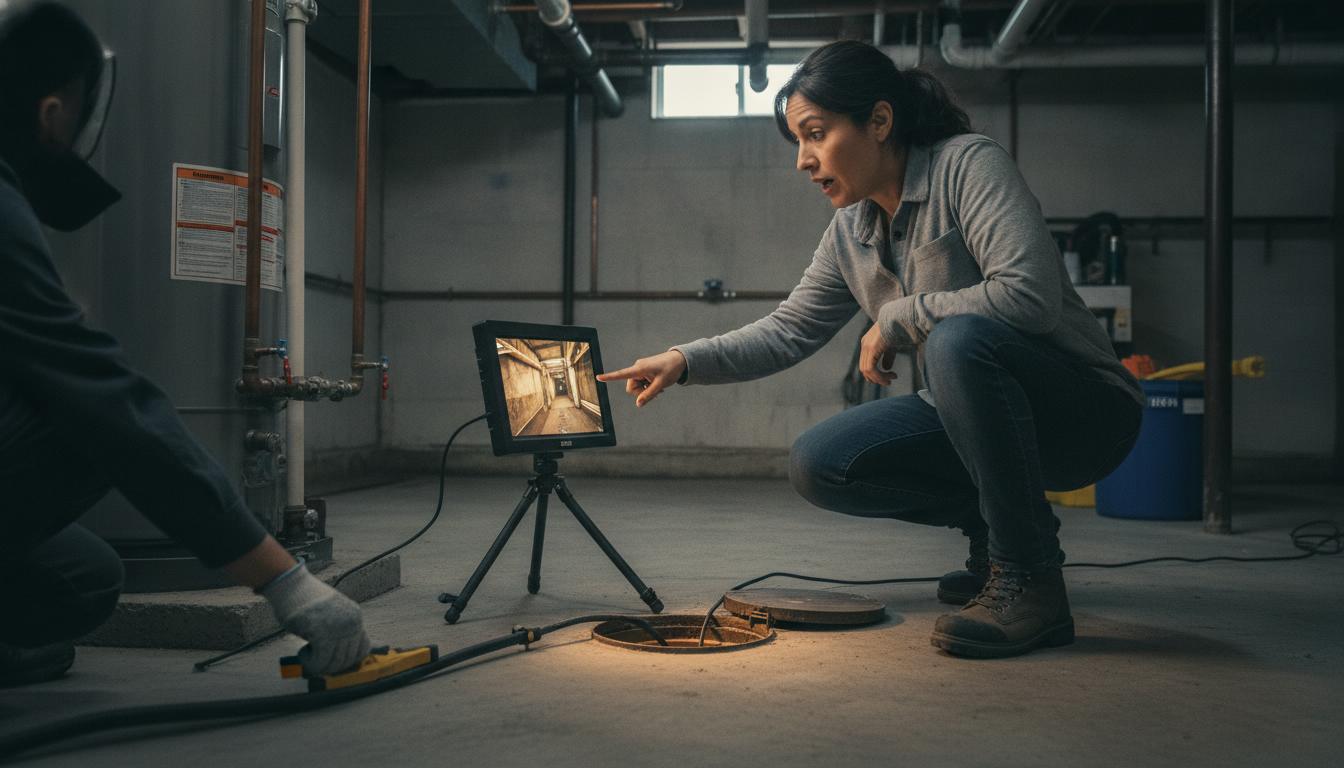
The second backup hit Dana’s basement floor drain in eighteen months. The first time, a plumber snaked the line, cleared a root mass, and charged $300. This time the camera found a cracked, root-invaded section about forty feet out toward the street. One plumber quoted $4,200 to dig up and replace that section. Another quoted $13,800 to replace the entire line, trenchless, end to end. The gap between those two numbers is more than $9,000, and the right answer is not automatically the cheaper one.
The two real numbers
Sewer work splits into two scopes, and the prices barely overlap. A section repair, sometimes called a spot repair, replaces only the damaged stretch of pipe, usually up to about twenty feet. That runs $4,000 to $8,000. A full line replacement swaps the entire run from your house to the city main, typically fifty to a hundred feet, and runs $8,000 to $20,000 by traditional dig.
The cost is driven by three things: how long the line is, how deep it sits, and what is on top of it. A pipe four feet down under a mature oak and a concrete driveway costs far more to reach than one two feet down under open lawn. Restoration is often the hidden line item. Breaking and repouring a driveway adds $2,000 to $5,000. Replacing torn-up landscaping with mature plantings adds $2,000 to $4,000. Those numbers ride on top of the pipe work itself.
So the spot repair is not just cheaper pipe. It is a smaller hole, less restoration, and less of your yard destroyed. That is exactly why it is tempting, and exactly why the next two sections matter before you take it.
Trenchless vs dig
The other axis is method, and it is separate from scope. Traditional repair digs a trench along the pipe, which on a full line can mean a fifty to hundred foot trench two to four feet deep across your front yard. Trenchless does the same job through one or two small access pits.
Trenchless comes in two flavors. Pipe lining, called CIPP, pulls a resin-coated liner through your existing pipe and cures it in place, forming a new jointless pipe inside the old one. Pipe bursting pulls a new pipe through while fracturing the old one outward. CIPP runs $8,000 to $18,000 for a full line; bursting runs $6,000 to $15,000. Both finish in one to two days against three to five for a dig, and both skip most of the landscaping bill because there is no long trench to restore.
The catch: CIPP lining needs a pipe with enough structure left to line. A fully collapsed pipe cannot be lined, only burst or dug. The camera inspection settles which methods are even on the table, which is why it comes first. If you want help reading the line items on these bids, how to read a plumbing quote breaks down what each charge should cover.
| Factor | Spot repair (dig) | Full replacement (dig) | Full replacement (trenchless) |
|---|---|---|---|
| Typical cost | $4,000 to $8,000 | $8,000 to $20,000 | $6,000 to $18,000 |
| Yard disruption | One small section | Full trench | One or two pits |
| Time on site | 1 to 2 days | 3 to 5 days | 1 to 2 days |
| What it fixes | The damaged section only | The entire line | The entire line |
| Best for | One isolated, first-time failure | Collapsed pipe, repeated failures | Old line, intact enough to line or burst |
The question that decides it
Here is the question no cost guide asks, and it is the one that should drive your choice: has this line failed in this spot before?
If this is the first failure on a relatively young line and the camera shows one clean, isolated break, a spot repair is the right call. You fix the damage, you spend $4,000 instead of $14,000, and you move on. There is no reason to replace eighty feet of healthy pipe to fix four feet of broken pipe.
But if your line has backed up more than once, especially in or near the same area, you are not looking at one bad spot. You are looking at a line that is failing. Old clay or cast-iron pipe, common in homes built before 1980, tends to fail in multiple places once it starts. Roots find every joint. A spot repair on a line like that fixes the section that failed first and leaves the next failure waiting six feet upstream. That is how homeowners end up paying for the cheap fix twice.
The five-year math
Put numbers on it. Say the spot repair is $4,200 and the full trenchless replacement is $13,800. On a sound line with one isolated break, the spot repair wins outright and it is not close.
Now run the line that has already backed up twice. The spot repair is $4,200 today. If the next section fails in two years, that is another $4,000 to $5,000, plus the emergency call-out premium if it backs up into your basement on a weekend, plus the cleanup. Two spot repairs plus a sewage cleanup can clear $10,000 inside three years, and you still have an aging line waiting to fail a third time. Against that, the $13,800 trenchless replacement buys a new pipe with a 50-year design life and ends the cycle. Over five years, the “expensive” option is the cheaper number. If you have already been through an emergency backup, our guide on what to do when a pipe bursts covers the immediate steps that limit the damage bill.
Before you sign
Two rules protect you regardless of which way you lean. First, no bid without a camera. A camera inspection costs $100 to $500 and is the only honest basis for a quote. Any contractor willing to price a repair without putting a camera down the line is guessing, and you are paying for the guess. The footage also shows you, with your own eyes, whether the damage is one spot or the whole run.
Second, get the inspection footage and at least three written quotes, and make sure each quote states the scope, the method, the restoration included, and the warranty. A trenchless replacement should carry a long warranty on the new pipe; a spot repair on an old line rarely does, and that gap tells you something about how long each is expected to last. Match the scope of every quote before you compare prices, or you will be comparing a spot repair against a full replacement and calling one “overpriced” when it is simply doing more.
FAQ
How do I know if I need a spot repair or a full replacement? The camera inspection answers it. One isolated break on an otherwise sound line points to a spot repair. Multiple cracks, widespread root intrusion, or a line that has backed up more than once points to a full replacement. Repeated backups in the same area are the clearest signal that a spot repair will not hold.
Is trenchless always more expensive than digging? Not always. Trenchless often costs less once you add the restoration a trench requires, like repouring a driveway or replacing mature landscaping. Pipe bursting in particular can come in below a traditional full dig once those costs are counted. Compare total bids, not just the pipe-work line.
Will homeowners insurance cover a sewer line repair? Standard homeowners policies usually exclude wear, age, and root intrusion, which cause most sewer failures. Some insurers sell a separate service-line endorsement for roughly $25 to $75 a year that may help. Check your policy before you assume you are covered, because most homeowners are not.
Can I just keep snaking the line instead of repairing it? Snaking clears a clog but does not fix a cracked or collapsed pipe. If you are snaking the same line every few months, you are paying repeatedly to manage a structural problem, not solve it. At that point the repair-versus-replace math has already tipped toward a permanent fix.
How long does a sewer line replacement last? A new PVC or HDPE pipe and a CIPP liner both carry a design life around 50 years. That is the core argument for replacing an old, repeatedly failing line rather than patching it: you trade a cycle of recurring repairs for a pipe that should outlast your time in the home.

Leave a Reply