
7 min read · Last updated July 20, 2026
- On a 100-degree day, a healthy central AC is only designed to cool your home about 20 degrees below the outdoor temperature, so a reading of 80 inside is not automatic proof the system is failing.
- Central AC units typically last 15 to 20 years; a 12-year-old unit needing a major repair is in the decision window, not automatically dead.
- The multiply-by-age rule: multiply the repair quote by the unit’s age, and if the result clears $5,000, replacement usually wins.
- Units built before 2010 often use R-22 refrigerant, which the EPA has phased out, making those repairs sharply more expensive.
In this article
– First confirm it is actually broken – The age math that settles most decisions – An old unit costs you every month it runs – The verdict: when to repair, when to replace – Frequently asked questions
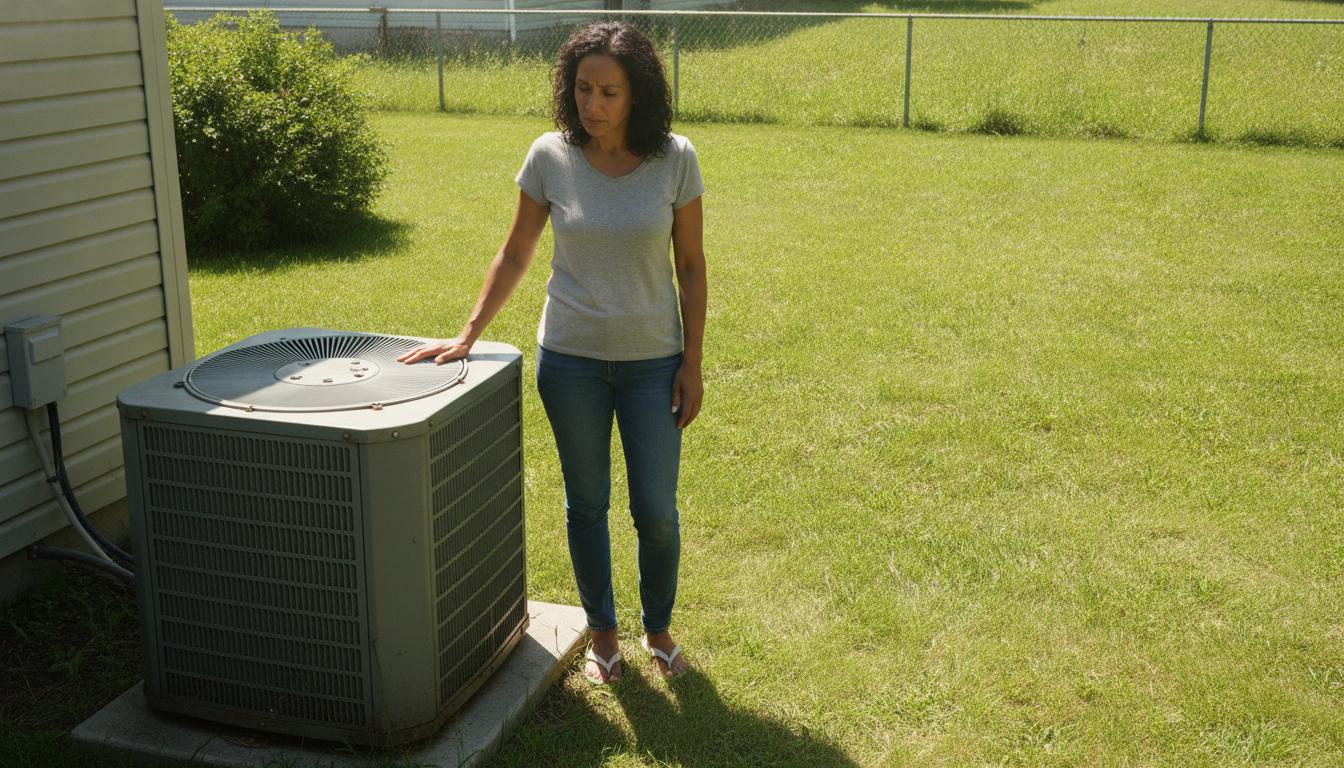
In mid-July, with the heat index near 100, the Alvarez family’s 12-year-old central air conditioner ran nonstop and still could not pull the house below 79 degrees. The repair quote was $1,300 for a failing compressor part. A brand-new system was $9,200. Standing in the driveway with the technician, they had to decide in an afternoon whether to spend the $1,300 and hope, or replace the whole unit.
That single fact saves a lot of unnecessary $9,000 decisions. Before you treat the heat-wave struggle as a death sentence for your unit, confirm the unit is actually failing and not just doing physics.
First confirm it is actually broken
Central air conditioners are sized to overcome a set temperature difference, not to hit any number you want on the thermostat. The rule technicians use is the 20-degree split: a properly working system lowers the indoor air about 20 degrees below the outdoor temperature. When it is 100 outside, keeping the house at 80 is the system doing its job, not breaking.
So before you panic, run a quick check. Pick the hottest part of the day and read the temperature of the air coming out of a supply vent, then the air going into the return vent. A gap of roughly 16 to 22 degrees means the system is cooling correctly and is simply maxed out by the heat load. A gap far below that, warm air at the vents, ice on the refrigerant line, or a unit that short-cycles on and off points to a real fault worth diagnosing.
If it is a real fault, the next question is not “can it be fixed.” Almost anything can be fixed. The question is whether fixing a unit this old is throwing good money after bad.
The age math that settles most decisions
Central AC systems last 15 to 20 years with maintenance, and performance and efficiency drop in the final third of that life. A 12-year-old unit is in the decision window: old enough that a major repair is a genuine question, young enough that replacement is not automatic.
The cleanest way to decide is the multiply-by-age rule. Multiply the repair quote by the age of the unit in years. If the product is more than $5,000, replacement usually wins. If it is well under, repair and keep saving toward the eventual replacement.
Here is the rule applied to a few common repair quotes so you can find your own situation quickly.
| Repair quote | Unit age 8 yrs | Unit age 12 yrs | Unit age 16 yrs |
|---|---|---|---|
| $400 | $3,200 repair | $4,800 repair | $6,400 replace |
| $700 | $5,600 replace | $8,400 replace | $11,200 replace |
| $1,300 | $10,400 replace | $15,600 replace | $20,800 replace |
Run the Alvarez numbers through it: $1,300 times 12 years is $15,600, far past the $5,000 line. The math says replace, and it is not close. The same age threshold logic applies to other big home systems, which is why we use it for the water heater replace-or-wait decision too.
An old unit costs you every month it runs
The repair-versus-replace decision is not only about the repair bill. An aging AC costs you on every electric bill while you keep it. Cooling is one of the largest slices of a summer utility bill, and a unit from the mid-2010s runs at a lower efficiency rating than today’s models. The U.S. Department of Energy notes that the higher a unit’s efficiency rating, the less electricity it uses to cool the same house, so a high-efficiency replacement quietly lowers your summer bills for years after the install.
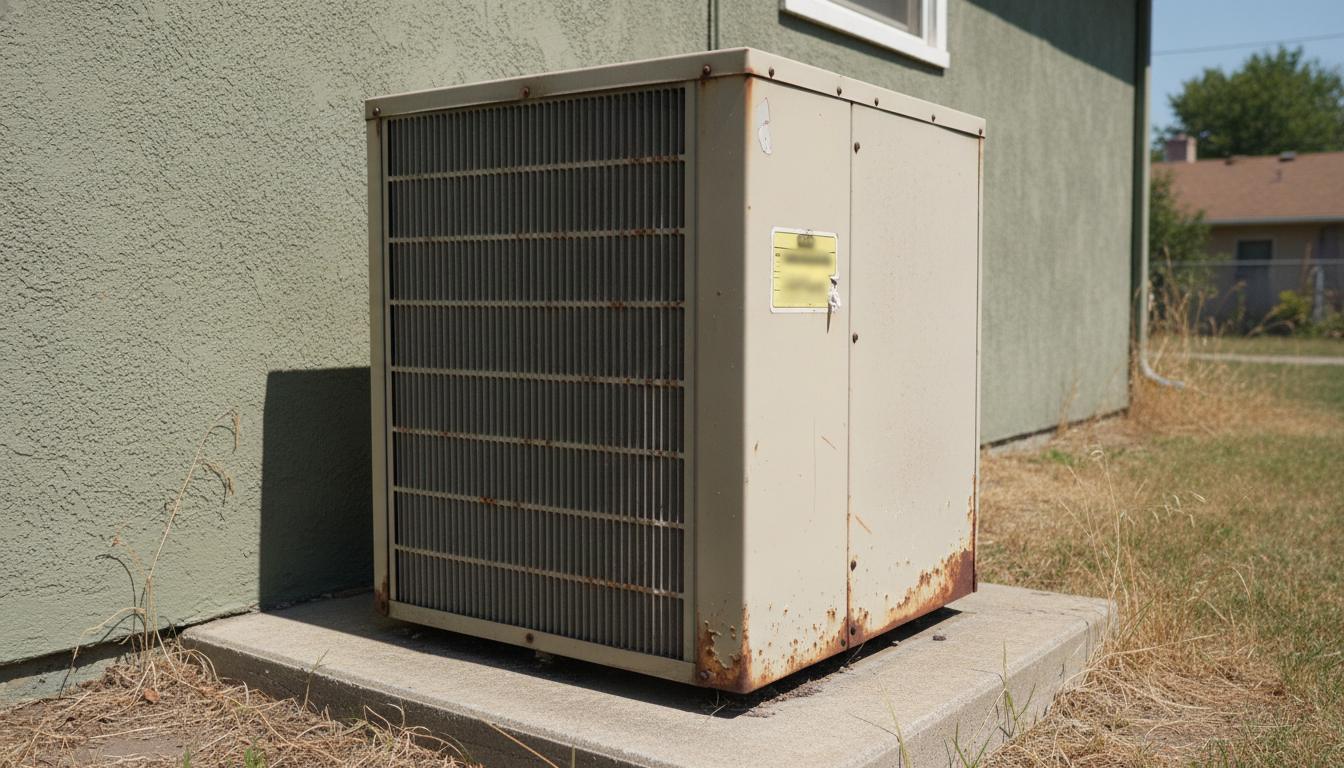
There is a second cost trap in older units. Systems built before 2010 typically use R-22 refrigerant, which the Environmental Protection Agency banned from new production as of January 2020. Servicing an R-22 system now relies on scarce recycled or stockpiled supply, so when an old unit springs a refrigerant leak, the recharge alone can cost hundreds of dollars. A repair that would be routine on a modern unit becomes a money pit on an R-22 one. If your unit is that old and the repair involves refrigerant, that pushes the decision hard toward replacement.
To keep whatever unit you land on running its full lifespan, follow a real HVAC maintenance schedule instead of waiting for the next heat-wave failure.
The verdict: when to repair, when to replace
Put the two paths side by side against the criteria that actually decide it.
| Decision factor | Repair | Replace |
|---|---|---|
| Unit age | Under about 10 years | 12 years or older |
| Multiply-by-age result (quote times age) | Well under $5,000 | Clears $5,000 |
| R-22 refrigerant involved | No refrigerant work needed | Old R-22 system needing a recharge |
| Repair history | First real issue | Repeated repairs over the last two summers |
| Best for | A newer unit with a one-off, sub-$500 fix | An aging unit failing in peak heat where fixes keep stacking up |
Repair when the unit is under about 10 years old, the repair passes the multiply-by-age test comfortably, and it does not involve R-22 refrigerant. A single sub-$500 fix on an 8-year-old system is worth doing.
Replace when the unit is 12 or more years old and facing a major repair, when the multiply-by-age result clears $5,000, when it uses R-22 and needs refrigerant work, or when it has needed repeated repairs over the last two summers. Replacing now, before a full failure in peak heat, also means you choose the equipment and installer on your own timeline instead of taking whatever is available during an emergency in August.
For the Alvarez family, the call was clear: a 12-year-old unit, a $1,300 compressor repair, and a heat wave already exposing how hard it works to keep up. Replace, and stop paying to nurse a system past its useful life.
Frequently asked questions
How long should a central air conditioner last? With regular maintenance, most central AC systems last 15 to 20 years. Efficiency and reliability decline in the final third of that range, so a unit past 12 years facing a major repair is a legitimate replace-or-repair decision rather than an automatic fix.
My house will not cool below 80 in a heat wave. Is my AC broken? Not necessarily. A healthy system is designed to cool the indoor air about 20 degrees below the outdoor temperature. At 100 degrees outside, holding 80 inside is normal. Check the temperature difference between a supply vent and a return vent: a 16-to-22-degree gap means the system is working and simply maxed out by the heat.
What is the $5,000 rule for AC replacement? Multiply the repair quote by the age of the unit in years. If the result is more than $5,000, replacement usually makes more sense than repairing. A $700 repair on a 12-year-old unit is $8,400, which points clearly to replacement.
Why is repairing an old AC so expensive now? Units built before 2010 usually run on R-22 refrigerant, which the EPA phased out of production. Any repair that requires recharging R-22 costs far more than it once did because the refrigerant is scarce. That extra cost pushes older units toward replacement.
Should I replace my AC before it fully fails? If your unit is 12 or more years old and already struggling, replacing it proactively lets you choose the equipment and schedule the installer on your own terms. Waiting for a total failure in peak heat usually means higher emergency pricing and fewer choices.

Leave a Reply