
6 min read · Last updated July 13, 2026
- Standard homeowners insurance excludes flood damage entirely everywhere, meaning coverage for flooding only exists if you separately buy an NFIP (National Flood Insurance Program) or private flood policy.
- According to the National Flood Insurance Program, roughly 1 in 4 flood insurance claims come from homes outside high-risk mapped zones.
- FEMA flood zone maps are based on historical data and can lag behind newer development, drainage changes, and shifting rainfall patterns in your area.
- A basic NFIP policy for a moderate-risk home often runs several hundred dollars a year, far less than the cost of even a few inches of water damage.
In this article
– Why the flood zone map isn’t the full picture – What your homeowners policy actually excludes – What flood coverage actually costs – When skipping it is a reasonable call – FAQ
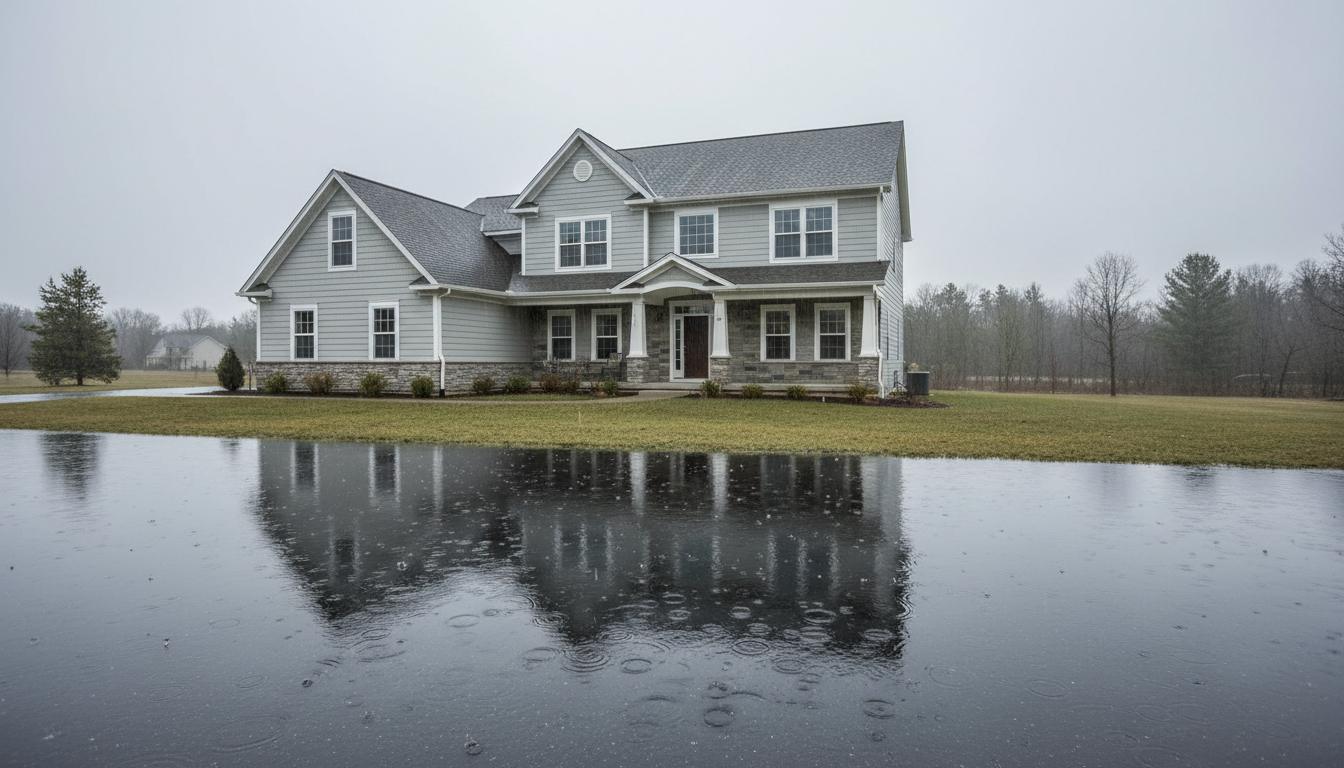
Marcus closed on his house eighteen months ago in a neighborhood his lender classified as low flood risk, so he was never required to carry flood insurance. Then a storm dropped six inches of rain in four hours, a drainage culvert two blocks away backed up, and water crept into his finished basement overnight. His homeowners policy adjuster’s answer came fast: flood damage is not covered, mapped zone or not.
Marcus’s situation is common enough that it has a name in the insurance industry: moderate-to-low-risk flooding. Here is what determines whether you should carry coverage anyway.
Why the flood zone map isn’t the full picture
FEMA flood maps sort properties into risk zones using historical flood data, elevation surveys, and modeled rainfall patterns. They are a genuinely useful starting point, but they are not a real-time forecast. Maps get updated on a rolling schedule that can lag years behind new development nearby, changes to drainage infrastructure, and shifts in regional rainfall intensity.
According to the National Flood Insurance Program (NFIP), the federal program that underwrites most residential flood policies, roughly 1 in 4 flood claims nationally come from properties outside the mapped high-risk zones. That statistic exists because the map measures probability, not certainty. A “low risk” designation means flooding is less likely where you live, not that it is impossible.
What your homeowners policy actually excludes
This is the part most homeowners misunderstand until a claim gets denied. Standard homeowners insurance covers water damage from a burst pipe or a roof leak, but it draws a hard line at flooding, meaning water that enters your home from outside sources like heavy rain, storm surge, or an overwhelmed drainage system. That exclusion applies everywhere, in every flood zone designation, with no exceptions built into a standard policy.
Flood coverage is sold separately, either through the NFIP or a small but growing private flood insurance market. Your mortgage lender only requires it if your home sits in a FEMA-designated high-risk zone (Zone A or Zone V). Outside those zones, buying flood coverage is entirely your decision, which means most homeowners in moderate-risk areas simply never think to ask about it until Marcus’s situation happens to them.
What flood coverage actually costs
A basic NFIP policy for a home in a moderate-to-low-risk zone typically runs a few hundred dollars a year, well under what many homeowners pay for other add-on coverages like scheduled jewelry or umbrella liability. Pricing depends on your elevation, your home’s foundation type, and your specific ZIP code’s risk data, so get a real quote rather than assuming a flat number applies to your address.
| Situation | Standard Homeowners Policy | Separate Flood Policy |
|---|---|---|
| Burst pipe floods a room | Covered | Not applicable |
| Storm surge or heavy rain floods basement | Excluded | Covered |
| Required by lender | Always required | Only in FEMA high-risk zones |
| Typical annual cost (moderate-risk home) | Included in existing premium | Often a few hundred dollars a year |
| Best for | Every homeowner, no exceptions | Homeowners near waterways, low-lying land, or aging drainage systems, even outside mapped zones |
When skipping it is a reasonable call
Flood coverage is not automatically the right call for every home outside a mapped zone. If you live well above grade, on high ground with strong natural drainage, and have no history of standing water or nearby drainage problems, the added premium may not be worth it for your specific address. The decision should track your home’s actual water exposure, not just the map’s color code. Confirm your policy’s real coverage limits before you assume you are protected, using how much dwelling coverage you need, and if you have added a finished basement or other space since buying, check which home improvements require an insurance update since added square footage can also change your flood exposure.
FAQ
Does my homeowners insurance cover flooding if I’m not in a flood zone? No. Standard homeowners policies exclude flood damage everywhere, regardless of your FEMA flood zone designation. The zone only determines whether your lender requires you to carry a separate flood policy, not whether flood damage is covered by your existing homeowners insurance.
How do I know if flood insurance is required for my home? Your mortgage lender will tell you at closing if your home sits in a FEMA high-risk zone (Zone A or Zone V), which makes flood insurance mandatory. You can also look up your specific address on FEMA’s flood map service to check your zone designation yourself.
What does the NFIP actually cover? A standard National Flood Insurance Program policy covers direct physical damage to your home’s structure and, with a separate contents policy, your belongings, up to program limits. It does not cover temporary living expenses if you’re displaced, so check whether your homeowners policy or a private flood add-on covers that gap.
Is private flood insurance better than an NFIP policy? It depends on your home. Private flood insurance can offer higher coverage limits and sometimes lower premiums for lower-risk properties, while the NFIP offers standardized coverage that is available nationwide regardless of a private insurer’s risk appetite. Compare quotes from both before deciding.
Can I add flood insurance any time, or only at closing? You can buy flood insurance at any point, not just at closing, though most policies have a 30-day waiting period before coverage takes effect. That waiting period means buying flood coverage the week a storm is forecast is usually too late, so decide before the season your area is most at risk.
Make sure your coverage matches your real risk
Compare homeowners insurance options and see where your current policy has gaps.
Compare Home Insurance Options →Primary sources: FloodSmart.gov, the NFIP’s official consumer site and Insurance Information Institute flood insurance facts and statistics.


Leave a Reply