
8 min read · Last updated May 25, 2026
- Seven of the ten largest US homeowners carriers enforce a roof-age cap on replacement cost coverage between 15 and 20 years.
- The payout gap between replacement cost (RCV) and actual cash value (ACV) on a typical asphalt roof claim is $10,000 to $15,000.
- The window to act is between year 15 and year 17 of the roof’s age. After that, your options narrow quickly.
- A paid roof condition inspection with a written report can extend RCV eligibility by three to five years on some carrier policies.
In this article
– What your carrier already knows about your roof – The dollar gap between RCV and ACV – Conversation 1: get the exact ACV threshold on your policy – Conversation 2: schedule a roof condition inspection – Conversation 3: shop carriers before you are forced to – FAQ
What your carrier already knows about your roof
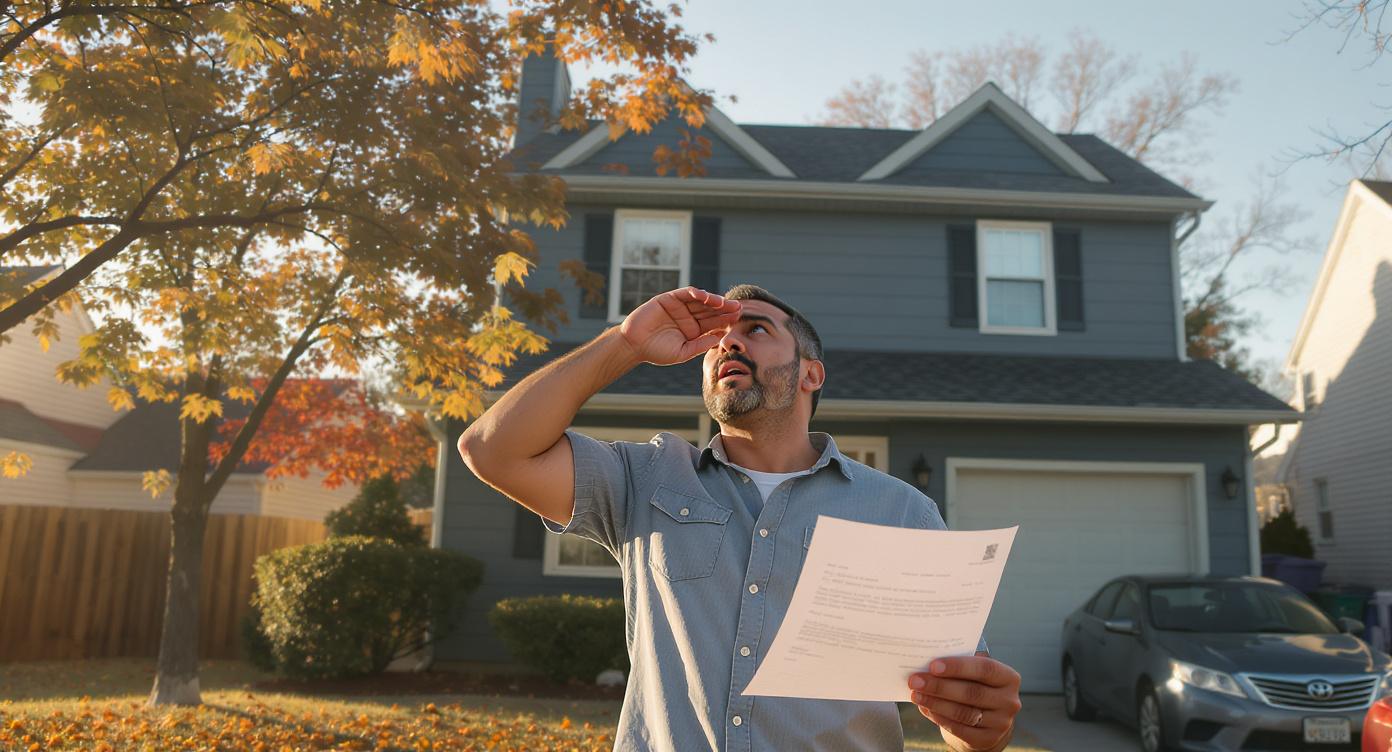
A Texas homeowner in his early 50s with a 17-year-old asphalt shingle roof received a renewal notice in May 2026. The notice did not cancel his policy. It downgraded the roof from replacement cost value to actual cash value. The premium dropped $80. He did not think twice. Six weeks later a hailstorm hit. His contractor’s estimate to replace the roof was $14,500. The insurance payout, calculated on a 17-year-old roof depreciated against a 20-year useful life, came to $2,400 after the deductible.
He had assumed the renewal notice was routine. The carrier had been tracking the roof age since the original inspection. Their decision was made years in advance.
Roof age is now the single most-watched variable in homeowners underwriting. Carriers fly satellite imagery, pull contractor permit records, and review prior claim photos at every renewal. By year 15, they have a clear picture. By year 18, they have already decided what they will offer at the next renewal cycle.
The dollar gap between RCV and ACV
Replacement cost value pays what it costs today to replace the damaged roof with comparable materials. Actual cash value pays the depreciated value, which is what the roof is worth given its age and remaining useful life.
On a $15,000 asphalt shingle replacement at year 17, the math runs like this:
RCV payout: $15,000 minus a $1,500 deductible equals $13,500.
ACV payout: $15,000 starting value, depreciated 17 of 20 years (85 percent depreciation), leaves $2,250 in remaining value, minus the same $1,500 deductible equals $750.
That is not a typo. The same hailstorm under the same dwelling coverage with the same deductible pays $13,500 under RCV and $750 under ACV. The gap is $12,750, real money the homeowner now has to cover out of pocket to actually replace the roof.
Carriers do not usually flag the distinction in the renewal letter. The premium might drop a little. The deductible often stays the same. The dwelling coverage limit does not change. The only difference is one acronym in the declarations page. It costs the homeowner thousands the first time it matters.
Three carriers in 2026 still underwrite RCV on roofs older than 20 years without an exclusion: USAA (military families only), Erie Insurance (limited geographic footprint), and select regional mutual insurers. Everyone else either non-renews, downgrades to ACV, or requires roof replacement documentation to maintain RCV coverage.
Conversation 1: get the exact ACV threshold on your policy
The first call goes to your current carrier. The question is specific: at what roof age does my policy convert from RCV to ACV, and is that age based on installation year or renewal year?
Some carriers convert at year 20 across the board. Some convert at year 15 on asphalt and year 25 on metal or tile. Some run a sliding depreciation that starts at year 10 and reduces RCV by 10 percent per year, so a 15-year roof might still get 50 percent RCV. The agent will tell you your specific schedule if you ask directly.
Get the answer in writing. An email reply is fine. Most carriers will provide a “schedule of roof coverage” if you request it. If they will not, that is your signal to shop.
For deeper context, PHW’s homeowners insurance coverage limits explains the broader risk of underinsurance, and the premium reduction guide walks through discounts most homeowners miss. For visual cues that change your carrier’s underwriting math, the roof warning signs breakdown lists what to watch for.
Conversation 2: schedule a roof condition inspection
Between year 14 and year 16, schedule a paid roof condition inspection with a licensed roofer. The cost runs $150 to $400. The deliverable is a written condition report that states the remaining useful life of the roof, the materials, and any maintenance issues identified.

A condition report with a five-plus year remaining-life assessment is a negotiation tool. Some carriers will extend RCV eligibility three to five years past their standard cutoff when you submit a current condition report at renewal. Not every carrier accepts these reports. The ones that do treat them as binding documentation.
Pick a roofer who is not pitching a replacement. The condition report has to be independent. A roofer who walks up the ladder and immediately quotes a full replacement will not deliver a useful report for insurance purposes. Look for licensed contractors who do paid inspections as a separate line of business.
If the inspection comes back with significant issues (granule loss, exposed underlayment, multiple damaged shingles), the report also signals that proactive replacement is cheaper than waiting for the carrier to force the issue. A planned replacement at year 16 costs the same as an emergency replacement at year 22. The difference is who pays for it.
Conversation 3: shop carriers before you are forced to
The third conversation is with two or three competing carriers. Independent agents will write quotes from five to ten carriers in a single appointment. Request quotes with explicit notation: current roof age, asphalt shingle (or whatever your material is), written condition report attached. Ask each quoting carrier whether they are offering RCV or ACV on the roof at that age.
Shop while your current carrier is still renewing you. The minute a non-renewal notice arrives, your options narrow fast. New carriers are reluctant to take on a homeowner mid-non-renewal. Most prefer to underwrite clean renewals where they get to set the terms.
The right carrier to keep is not always the cheapest. It is the one offering RCV with the lowest deductible against the longest remaining roof life. On a 16-year-old roof, paying $200 more per year for an RCV policy is rational if it preserves $12,000 in payout capacity on a future claim.
If three carriers come back ACV-only, the market is telling you the roof has crossed the line. Plan replacement within 12 months. Get three roofing quotes. Compare contractor warranties; a 50-year material warranty plus a 10-year workmanship warranty is the current premium standard. Time the replacement to a season with contractor availability. April through June and September through October are the strongest pricing windows in most metros.
FAQ
Will replacing the roof guarantee RCV coverage from my current carrier? Usually yes, but request written confirmation before scheduling the replacement. Some carriers underwrite the policy as a new risk after replacement and some treat it as a continuation. The treatment affects whether you keep your loyalty discounts, your current deductible, and your renewal date.
Does roof age affect my homeowners premium even before the ACV downgrade? Yes. Most carriers raise premiums 10 to 25 percent on roofs older than 15 years even while still offering RCV. The increase is usually folded into the annual renewal without a dedicated line item. Compare year-over-year premium changes against your current dwelling coverage to spot the pattern.
What if my roof is in great shape but it is still 18 years old? Carrier underwriting is age-based, not condition-based, with limited exceptions. A condition report can sometimes extend RCV by three to five years (see Conversation 2). It will not override a hard age cutoff. If your carrier’s cutoff is 20 years and your roof is 19, you have roughly one renewal cycle before the policy shifts to ACV.
Are impact-resistant shingles treated differently? Yes. Class 4 impact-resistant shingles often qualify for extended RCV coverage and reduced premiums. The trade is installation cost. Class 4 shingles run 25 to 40 percent more than standard asphalt at installation. On a $15,000 roof, that is a $4,000 to $6,000 premium up front for an estimated 5-year coverage extension and 10 to 15 percent annual premium reduction.
What if I cannot replace the roof and my carrier non-renews? State FAIR Plans and surplus lines carriers will write coverage that standard carriers will not. Premiums run 30 to 70 percent higher and coverage is usually limited (often ACV-only on the roof). Better than uninsured, but a stopgap. Plan the replacement within 12 to 18 months while you carry the FAIR Plan policy.
Compare home insurance carriers that still write RCV on older roofs
Run your address against multiple carriers and see who will keep you on replacement-cost coverage at your roof’s current age.
See Home Insurance Quotes →

Leave a Reply