

*8 min read · Last updated June 15, 2026*
In this article
– The upfront gap and what incentives close – Operating cost: where each one wins – The climate question – The verdict: when each is the smart buy – FAQ
Renee’s 19-year-old gas furnace failed inspection in October, and two contractors handed her completely different paths. One quoted $6,200 to drop in a new high-efficiency gas furnace. The other quoted $15,800 for a cold-climate heat pump, then mentioned a federal tax credit would knock $2,000 off. She stared at the two numbers and could not tell whether the heat pump was the smart long game or an expensive mistake for her climate.
That is the right instinct, because the answer genuinely depends on her house and her utility rates. Here is how to run the comparison instead of guessing.
The upfront gap
Start with the honest sticker difference, then see what incentives actually close.
A new gas furnace typically runs $4,500 to $8,000 installed, depending on size and efficiency. A whole-home heat pump system generally runs $12,000 to $20,000 installed. The heat pump costs more partly because it is doing two jobs, heating and cooling, in one system.
Incentives narrow the gap. The federal Energy Efficient Home Improvement Credit, known as 25C, covers 30% of the cost of a qualifying heat pump up to $2,000 per year, per the IRS and ENERGY STAR. That is a credit, meaning it reduces your tax bill dollar for dollar, not just your taxable income.
Beyond the federal credit, many states run rebate programs, some funded through the Inflation Reduction Act, that can add thousands more for income-qualified households. These vary widely by state and the funding and rules change, so do not assume a number you read last year still holds. Check your state energy office and energystar.gov for what is live in your area before you let a contractor quote a payback period that bakes in a rebate you may not get.
| Factor | Heat pump | Gas furnace |
|---|---|---|
| Installed cost | $12,000 to $20,000 | $4,500 to $8,000 |
| Federal 25C tax credit | 30% up to $2,000 | Up to $600 for high-efficiency models |
| Heats and cools | Yes, one system does both | Heats only, needs a separate AC |
| Best climate | Mild to cold with cold-climate models | Severe cold, especially with cheap gas |
| Operating cost driver | Local electricity price and efficiency | Local natural gas price |
| Typical lifespan | 12 to 15 years | 15 to 20 years |
| Best for | Owners replacing an aging AC too, or with high gas prices | Cold regions with cheap gas and a working AC |
Operating cost
This is where the heat pump can claw back its higher upfront cost, but only under the right conditions.
A heat pump does not burn fuel to make heat. It moves heat from the outside air into your home using electricity, and it does this efficiently. The Department of Energy notes that a heat pump delivers two to four units of heat for every unit of electricity it uses. A gas furnace, by contrast, can only ever deliver slightly less heat than the fuel it burns. On a pure energy basis, the heat pump is far more efficient.
But efficiency is not the same as cost, and this is where homeowners get tripped up. Your bill depends on what you pay for electricity versus what you pay for natural gas. In regions with cheap electricity, a heat pump can cut heating costs meaningfully. In regions with cheap gas and pricey electricity, a high-efficiency furnace can actually be cheaper to run month to month, even though it is less efficient on paper.
There is one more lever in your favor. A heat pump pairs well with a tight, well-insulated home, because the less heat your house loses, the less the system has to work. Before or alongside a system upgrade, our guides to insulation types that make the biggest difference and reading your energy bill for hidden waste help you cut the load the new system has to carry.
The climate question
The old knock on heat pumps was that they quit in the cold. That was true a decade ago. It is largely not true now.
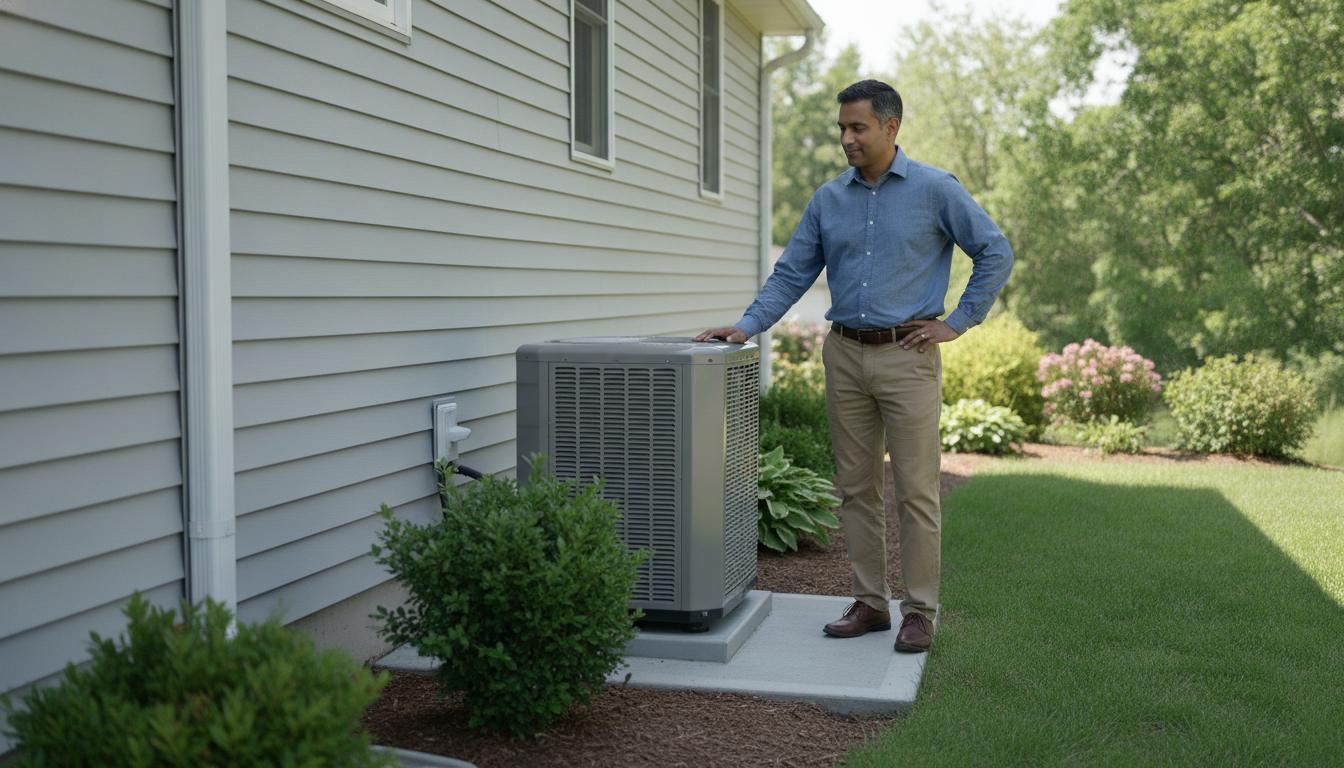
Modern cold-climate heat pumps are designed to deliver efficient heat at temperatures well below freezing, with many rated to keep heating effectively down to around 5 degrees Fahrenheit and lower, per ENERGY STAR cold-climate specifications. In most of the country, a properly sized cold-climate unit handles winter on its own.
In the coldest regions, the common setup is a dual-fuel or hybrid system: a heat pump handles most of the season efficiently, and a backup gas furnace kicks in on the few brutally cold days when the heat pump is least efficient. That hybrid approach captures the heat pump’s savings most of the year while keeping the furnace’s brute-force heat for the deep freeze. It costs more than either system alone, so it makes the most sense in genuinely severe climates.
If your winters are mild to moderate, a standalone heat pump is usually the cleaner choice. If you regularly see long stretches well below zero, price out a hybrid or keep the furnace.
The verdict
Choose the heat pump if your air conditioner is also aging, since one system then replaces two and the cost comparison tilts hard in its favor. It also wins if your electricity is cheap relative to gas, if you live in a mild to moderately cold climate, or if you want the efficiency and the cooling in one unit. The 25C credit and any state rebate sweeten an already reasonable case.
Stick with the gas furnace if you live in a severe-cold region with cheap natural gas, if your central air conditioner is newer and working fine, or if the upfront budget simply is not there and incentives in your state are thin. A high-efficiency furnace is a proven, lower-cost-to-install system that will run reliably for 15 to 20 years.
Whichever you choose, get the sizing right and keep up with maintenance, because an oversized or neglected system wastes the efficiency you paid for. Our guide to HVAC care that extends system life covers the upkeep that protects the investment, and a smart thermostat helps either system run only when it needs to.
FAQ
Does a heat pump work in freezing temperatures? Yes. Modern cold-climate heat pumps are rated to heat efficiently at temperatures well below freezing, many down to around 5 degrees Fahrenheit and lower. In the coldest regions, a hybrid setup pairs the heat pump with a backup furnace for the few extreme days, which captures most of the savings while keeping reliable heat.
Is a heat pump cheaper to run than a gas furnace? It depends on your local energy prices. A heat pump is far more efficient, delivering two to four units of heat per unit of electricity, but your actual bill hinges on what you pay for electricity versus gas. Where electricity is cheap it usually wins. Where gas is cheap and electricity is expensive, a furnace can cost less month to month.
What is the federal tax credit for a heat pump in 2026? The federal 25C Energy Efficient Home Improvement Credit covers 30% of the cost of a qualifying heat pump, up to $2,000 per year. It is a tax credit that reduces your bill dollar for dollar. Confirm the specific model qualifies and check for state rebates that may stack on top, since those vary and change.
Do I need new ductwork to install a heat pump? Not always. If you have existing ductwork in good shape, a ducted heat pump can use it. If you have no ducts or want to heat specific zones, ductless mini-split heat pumps mount on walls and need no ductwork at all. A contractor should assess your existing ducts for sizing and leakage before quoting.
How long does a heat pump last compared to a furnace? A heat pump typically lasts 12 to 15 years, while a gas furnace often runs 15 to 20 years. The heat pump’s shorter lifespan reflects that it runs year-round for both heating and cooling, doing the work of two systems, where a furnace only operates in the heating season.

Leave a Reply